

PSA Value grading is back at $39.99 per card, giving collectors another option after months of changing service availability and turnaround expectations. However, the return of a lower-priced PSA tier does not automatically make it the smartest grading investment. TAG, CGC, SGC, and GameStop each offer different combinations of cost, turnaround, submission requirements, and potential resale advantages.
For collectors deciding where to send their next cards, the real question is not simply which grading company charges the least. It is which service makes financial and practical sense for the cards being submitted, the intended outcome, and the amount of time a collector can afford to wait.
PSA Value Grading Returns at $39.99, but What Actually Changed?
On October 28, 2026, PSA announced that its Value service would reopen on October 29 at 8 a.m. Pacific Time. The reopened tier costs $39.99 per card in the United States, carries a $500 maximum insured value, and has an estimated turnaround of 90 to 100 business days. PSA also reduced the estimated turnaround times for its Standard and Priority services, although those changes apply to qualifying new submissions rather than retroactively changing existing orders.
Importantly, PSA stated that new Value submissions would enter processing behind orders already at PSA. That distinction matters because a reopened service level does not mean every previously delayed submission has cleared the system. PSA also acknowledged existing delays and emphasized that turnaround estimates can change with submission volume.
Source: PSA’s October 28 reopening announcement.
PSA’s current grading services page confirms the $39.99 price, $500 maximum insured value, and 90 to 100 business-day estimate. The tier includes standard front-and-back imaging of the graded card. However, the page still displays a heading stating that Value services are temporarily paused, even while listing Value pricing and a submission option. The dated reopening announcement is the clearer source for the October 29 reopening, while the live pricing table confirms the published service terms.
Source: PSA trading card grading services.
The strategic implication is straightforward: PSA has reopened a more accessible grading tier, but collectors still need to decide whether its cost and waiting period fit their individual cards.
PSA Value Grading vs TAG, CGC, SGC, and GameStop: The Numbers
The following comparison reflects the published service information available on November 5, 2026. These figures represent base grading fees rather than complete submission costs. Shipping, handling, coverage selections, membership expenses, and other applicable charges can change the final amount.
| Service | Base fee per card | Value limit | Published turnaround |
|---|---|---|---|
| PSA Value | $39.99 | $500 max insured value | 90-100 business days |
| TAG Value | $29.95 | Protection up to $250 per card | 90 business days |
| CGC Bulk | $17 | $500 | 150 working days |
| CGC Economy | $20 | $1,000 | 90 working days |
| SGC Standard | $50 | $1,500 | 40+ business days |
| GameStop PSA | $39.99 | $500 declared value | 90-100 business days |
TAG Value requires a 10-card minimum and includes protection up to $250 per card. Turnaround is estimated at 90 business days from intake and is not guaranteed. Availability may be limited, and return shipping is extra.
The other listed base prices and estimates are supported by the companies’ published information. CGC explicitly uses working days, while PSA, SGC, and GameStop use business days. Although the terms are broadly comparable, each company’s processing start point and operational exclusions can differ.
Primary pricing sources: PSA, TAG, CGC, SGC, and GameStop.
Why the Cheapest Grading Fee Is Not Always the Best Deal
At first glance, CGC Bulk has a substantial pricing advantage over PSA Value. A $17 grading fee is $22.99 less per card than PSA’s $39.99 fee. However, CGC Bulk requires at least 25 cards and currently carries a 150-working-day turnaround estimate.
Meanwhile, CGC Economy costs $20 per card, has a $1,000 maximum value per card, and lists a 90-working-day estimate. For a collector submitting only a few cards, that combination may be more practical than waiting to assemble a bulk order. CGC also offers grading discounts for eligible paid members, although membership costs should factor into the calculation.
Consequently, the lowest advertised fee is only one part of the decision. Submission size, expected resale value, and how long the cards will remain unavailable can matter just as much.
PSA vs CGC: Does the Resale Market Justify Paying More?
PSA’s strongest strategic argument is not its $39.99 grading fee. Instead, collectors may prefer PSA because of its established presence in graded-card transactions, recognizable certification system, and established buyer audience. Those characteristics can matter when the goal is resale rather than simply authentication or long-term collection storage.
However, collector preference does not establish a universal PSA resale premium. The actual difference between a PSA-graded card and a CGC-graded equivalent depends on the specific card, grade, population, recent sales, and buyer demand. A collector should examine completed transactions for the exact card before assuming that paying more for PSA will produce a better financial result.
CGC’s pricing creates an especially interesting alternative for modern sports cards and trading card games. Its Economy tier costs $19.99 less than PSA Value while allowing a higher published maximum value per card. Furthermore, CGC offers a Pristine 10 designation for cards meeting its highest grading standard, although collectors should never assume their cards will qualify.
For a broader explanation of how the companies differ, our card grading companies comparison examines the considerations behind choosing a grading service.
The Break-Even Question
Suppose two grading companies are equally suitable for a particular card. If one charges $39.99 and the other charges $20, the more expensive service must generate at least $19.99 in additional net proceeds to offset the grading-fee difference, assuming all other costs are identical.
That calculation does not establish that PSA will deliver a higher sale price. Instead, it identifies the additional amount a collector would need to recover before the higher grading fee makes financial sense. Once marketplace fees, shipping, and grade uncertainty enter the equation, the required gross sale-price difference can become larger.
PSA vs TAG: Is Grading Transparency Worth More Than Brand Recognition?
TAG approaches grading with a different emphasis. Its published system highlights detailed imaging, digital grading reports, defect analysis, and technology-supported evaluation. Depending on the selected service, collectors can also access more detailed scoring and presentation features.
For collectors who want to understand why a card received its grade, that transparency can provide meaningful value. A detailed report may also help collectors learn what to inspect before future submissions. Nevertheless, better visibility into a grading decision does not automatically translate into stronger resale demand.
TAG Value costs $29.95 per card with a 10-card minimum and an estimated turnaround of 90 business days from intake. It includes protection up to $250 per card. TAG states that its grading price does not change with a card’s value. Availability may be limited, return shipping is extra, and turnaround estimates are not guaranteed.
Source: TAG official pricing and submission information.
TAG also lists eligibility restrictions, including certain card types, older cards, memorabilia, and thicker stock. Therefore, collectors should confirm that their specific cards qualify before treating TAG as a direct substitute for PSA.
The practical decision comes down to purpose. TAG may appeal to collectors who prioritize detailed grading information and presentation, while PSA may better suit sellers whose specific card markets show stronger demand for PSA-certified examples. Neither outcome should be assumed without examining the cards and the current service offer.
PSA vs SGC: When Does Paying More Make Sense?
SGC Standard currently costs $50 per card for standard-size raw card grading, with a maximum declared value of $1,500 and an estimated turnaround of 40+ business days. That places its base grading fee $10.01 above PSA Value. However, SGC accommodates a higher card value at this tier and publishes a shorter starting turnaround estimate.
For collectors submitting vintage sports cards or cards they intend to keep, SGC deserves consideration beyond its price. Its distinctive holder and established grading approach may appeal to collectors who value presentation, authentication, and long-term ownership. Nevertheless, resale preferences vary by card category, so an SGC slab should not automatically be treated as financially equivalent to a PSA slab.
The most important qualification is SGC’s turnaround terminology. Its published estimate is 40+ business days, not a guaranteed 40-day completion window or a maximum of 40 days. SGC also states that its turnaround clock begins once an order has been unboxed and logged into its system.
Source: SGC official services and pricing.
Consequently, SGC may make sense when a collector values its higher declared-value allowance or prefers its grading presentation. However, a collector focused on maximizing resale proceeds should compare recent sales of equivalent SGC and PSA grades before committing.
GameStop vs PSA Value Grading: Same Grader, Different Submission Experience
GameStop introduces an interesting alternative because collectors are not choosing between two different grading companies. Instead, they are choosing between submitting directly to PSA and submitting through a participating GameStop location.
GameStop currently advertises PSA grading at $39.99 per card, with a $500 declared-value limit and an estimated turnaround of 90 to 100 business days. It also charges a flat $9.99 shipping fee per order. Unlike a bulk service, GameStop advertises no minimum card quantity, no required subscription, and no submission form for the collector to complete.
Source: GameStop’s official PSA grading service.
What GameStop Pro Members Actually Save
GameStop’s published page contains an important distinction regarding Pro membership benefits. Its pricing section advertises that Pro members receive $5 off, while the FAQ clarifies that this discount applies to shipping on grading submissions. Therefore, the documented benefit should not be interpreted as a $5 reduction in the grading fee for every card.
Based on those published terms, a Pro member would pay the same $39.99 base grading fee but receive a $5 shipping discount on the order. GameStop also advertises an additional 5% trade credit for eligible graded-card trades by Pro members. Membership costs, eligibility requirements, and applicable terms should be considered separately.
For example, the published base charges for a five-card GameStop submission would be:
| Cost component | Non-Pro | Pro |
|---|---|---|
| Five grading fees | $199.95 | $199.95 |
| Published order shipping fee | $9.99 | $9.99 |
| Pro shipping discount | $0 | -$5.00 |
| Illustrative total | $209.94 | $204.94 |
These totals assume the published rates apply to all five cards without additional grading charges. They exclude the cost of Pro membership, any required supplies, travel, and other applicable expenses. The discount applies to the order’s shipping charge rather than multiplying by the number of cards.
Is GameStop More Convenient Than Direct PSA?
For collectors who live near a participating location, GameStop can simplify submission logistics. Customers bring properly sleeved cards in card savers to the store, and GameStop handles the submission process through its PSA grading program. Once grading is complete, customers receive notification to collect their cards.
However, convenience does not eliminate every responsibility. Collectors still need to prepare their cards correctly, confirm eligibility, understand declared-value rules, and account for the estimated waiting period. GameStop also states that PSA may charge an additional fee when a card exceeds the $500 declared-value limit.
Therefore, the choice between GameStop and direct PSA is primarily about submission logistics, order costs, and personal preference. The cards ultimately go through PSA grading either way.
For a more detailed examination of the store-based submission model, see our GameStop PSA grading cost breakdown.
The Real ROI Calculation: When Is PSA Value Grading Worth $39.99?
Grading return on investment depends on more than the difference between a raw card’s purchase price and its eventual graded sale price. A realistic calculation must include grading fees, submission expenses, selling costs, and the amount invested in acquiring the card.
Furthermore, collectors must consider that the eventual grade is uncertain. A card that appears nearly flawless can still receive a lower grade than expected, and a lower grade can change the economics of the entire submission.
A useful starting formula is:
Net profit = Net sale proceeds – Card acquisition cost – Grading fee – Allocated submission costs
Here, net sale proceeds means the amount remaining after marketplace fees and seller-paid fulfillment costs. Allocated submission costs include each card’s share of shipping, insurance, supplies, and other applicable expenses.
Hypothetical Example 1: A Modern Card With Limited Upside
Assume a collector purchased a modern trading card for $40 and is considering PSA Value grading. For illustration, the collector estimates a possible graded sale price of $100, although that outcome is not guaranteed.
| Assumption | Amount |
|---|---|
| Card acquisition cost | $40.00 |
| PSA Value grading fee | $39.99 |
| Allocated submission costs | $6.00 |
| Hypothetical graded sale price | $100.00 |
| Assumed selling fees (13%) | $13.00 |
| Seller-paid fulfillment | $5.00 |
| Hypothetical net profit | -$3.99 |
Despite selling for $100, the card would produce a small loss under these assumptions. Moreover, this example assumes the card achieves a grade that supports the $100 sale price. A lower sale price would make the result worse.
The lesson is that a higher graded selling price does not necessarily mean a profitable grading decision.
Hypothetical Example 2: Comparing PSA and CGC Economy
Now assume a collector owns a card with a $60 acquisition cost. For this illustration only, suppose recent comparable sales suggest that a particular PSA grade could sell for $160 while an equivalent CGC grade could sell for $135.
These are invented scenario assumptions, not reported market prices or claims about actual grading premiums.
| Assumption | PSA Value | CGC Economy |
|---|---|---|
| Card acquisition cost | $60.00 | $60.00 |
| Grading fee | $39.99 | $20.00 |
| Allocated submission costs | $6.00 | $6.00 |
| Hypothetical sale price | $160.00 | $135.00 |
| Assumed selling fees (13%) | $20.80 | $17.55 |
| Seller-paid fulfillment | $5.00 | $5.00 |
| Hypothetical net profit | $28.21 | $26.45 |
Under these assumptions, PSA produces only $1.76 more profit despite the $25 difference in hypothetical sale prices. The higher grading fee and higher percentage-based selling fees absorb most of the additional revenue.
However, this calculation assumes both cards achieve the grades used in the sale-price estimates. It also assumes equal submission expenses and does not account for differences in the time required to find a buyer. Therefore, the result illustrates how to compare costs, not which grading company will perform better for a real card.
The PSA Break-Even Premium
Using the second example’s assumptions, PSA needs approximately $22.98 more in gross sale proceeds than CGC Economy to offset its $19.99 higher grading fee.
The calculation is:
$19.99 / (1 – 0.13) = $22.98
$22.98 is the required gross sale-price difference, assuming identical fixed expenses and a 13% selling fee.
This threshold provides a practical way to evaluate the choice. If actual comparable sales show that PSA consistently commands enough additional proceeds for the exact card and grade being considered, the higher grading fee may be justified. Otherwise, the lower-cost service may preserve more of the collector’s investment.
Turnaround Time Is a Financial Variable, Not Just a Waiting Period
A grading submission ties up a card for an uncertain amount of time. During that period, the collector cannot immediately sell the card as a graded example, and market demand may change. Consequently, turnaround time matters even when two services appear financially similar.
PSA Value’s estimated 90 to 100 business days should not be confused with 90 to 100 calendar days. PSA also states that its turnaround clock begins only after an order enters its grading system. Therefore, transit time and any time before order entry can extend the overall period between preparing a submission and receiving the graded cards.
CGC’s estimates use working days and reflect the expected processing time for a submission delivered to its facility under current conditions. SGC begins its clock after unboxing and logging an order. These differences make direct calendar comparisons less precise than a simple table suggests.
Sources: PSA grading services, CGC services and fees, and SGC pricing.
For a collector holding a card with stable, long-term personal value, a longer turnaround may be acceptable. However, a collector planning to sell into a specific market window should consider the risk that demand changes before the card returns. Paying for a faster service can sometimes make sense, but only when the potential benefit justifies the additional expense.
Why This Matters to Collectors
PSA’s Value reopening gives collectors more flexibility, but it also creates a temptation to submit cards simply because a familiar service is available again. That approach can turn grading into an automatic expense rather than a deliberate collecting decision.
The more useful question is whether grading serves a defined purpose. Authentication, collection preservation, presentation, registry participation, and resale are legitimate but different objectives. Each objective changes how much weight collectors should place on fees, turnaround, holder preference, and market demand.
For example, a collector building a personal collection may care more about consistency across holders than recovering every grading dollar. Meanwhile, a collector preparing inventory for resale needs to understand the realistic financial outcome across several possible grades. Neither approach is inherently better, but both benefit from clear expectations before submission.
The return of PSA Value also reinforces an important principle: a grading service can be competitively priced without being the right service for every card.
What Collectors Should Do Next
Before selecting PSA Value or an alternative, collectors should evaluate the card and the submission as a complete decision. A disciplined process can reduce unnecessary grading expenses and help identify situations where keeping a card raw makes more sense.
- Define the grading objective. Decide whether the card is for resale, authentication, personal collection, or long-term preservation.
- Research actual comparable sales. Compare the same card across grading companies and relevant grades, using completed sales rather than asking prices.
- Evaluate multiple grade outcomes. Calculate the financial result if the card receives a lower grade than expected.
- Check value limits and eligibility. Confirm that the selected service accepts the card and accommodates its appropriate declared or insured value.
- Calculate the full submission cost. Include grading fees, shipping, supplies, coverage, membership expenses, and potential additional charges.
- Consider the waiting period. Determine whether the card’s market and your intended selling timeline can tolerate the published turnaround estimate.
- Inspect and prepare the card carefully. Review centering, corners, edges, and surfaces before handling and packaging the card for submission.
Collectors who are still deciding whether grading makes sense can start with our guide on when you should grade your cards. For those leaning toward PSA, our PSA card grading guide provides additional context on the submission process.
A Better Grading Decision Starts Before the Card Leaves Your Hands
Choosing a grading company is only one part of a successful submission strategy. Once a collector selects a service, the focus shifts to preparation, handling, and packaging. This stage deserves attention because unnecessary handling or poor preparation can introduce avoidable risks before the card reaches the grading company.
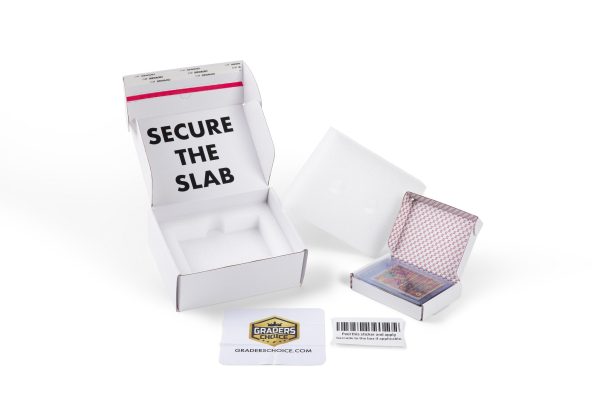
For that reason, Graders Choice approaches submissions as a structured process rather than a collection of unrelated supplies. The Graders Choice Card Grading Submission Kit brings together penny sleeves, semi-rigid holders, protective materials, and a shipping box designed around card preparation.
The goal is not to influence grading decisions or promise shipping outcomes. Instead, it is to help collectors approach the preparation and submission process with greater consistency and confidence.
Whether a collector chooses PSA, CGC, SGC, TAG, or another compatible grading service, careful preparation remains an important part of protecting the card’s condition before grading.
Final Verdict: Is PSA Value Grading Worth It in November 2026?
PSA Value at $39.99 is a meaningful option for collectors who specifically want PSA certification and can accommodate a 90 to 100 business-day estimated turnaround. Its value proposition becomes stronger when the collector’s specific card market demonstrates sufficient demand for PSA-graded examples to justify the grading expense.
However, CGC Economy presents a compelling lower-cost alternative at $20 per card, particularly for collectors whose cards fit its eligibility and value requirements. CGC Bulk offers additional savings for qualifying 25-card submissions, while SGC provides a different combination of declared-value allowance, grading presentation, and turnaround expectations. TAG may appeal to collectors who prioritize grading transparency, with its Value tier priced at $29.95 per card for submissions of at least 10 cards and an estimated turnaround of 90 business days.
GameStop offers a different kind of value: access to PSA grading through participating retail locations. Its $39.99 grading fee, $9.99 order shipping charge, and verified Pro shipping discount make the comparison with direct PSA primarily a question of logistics and total submission cost.
Ultimately, the best grading decision is the one supported by the card’s actual market, the collector’s objective, and a realistic understanding of costs and uncertainty. PSA Value is back, but that does not mean every card belongs in a PSA submission.
Collectors who evaluate the numbers before submitting, and who prepare their cards with care, are better positioned to make decisions that support their collecting goals.
 English