
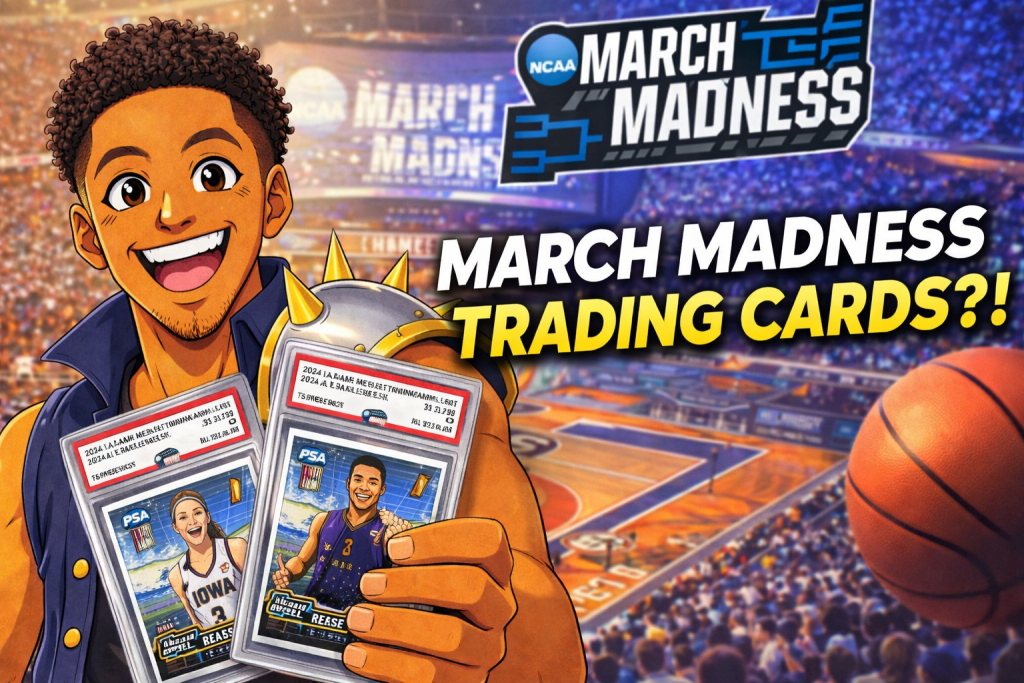
The arrival of March Madness trading cards marks a turning point in the hobby. For the first time, the NCAA has officially entered the licensed trading card space through a NIL-driven partnership with Topps. This is more than just another product release. It represents a structural shift in how collegiate athletes, licensing, and collectibles intersect.
For collectors, this moment is not just about new cards. It is about understanding how early adoption, grading decisions, and preparation strategy can influence long-term value.
The NCAA NIL Era Begins with March Madness Trading Cards
The NCAA’s first NIL licensing deal opens the door for athletes to appear on officially licensed trading cards while still in college. That alone changes the timeline of collectibility.
Names like Caitlin Clark, Angel Reese, Zach Edey, and Tristen Newton are no longer “wait until draft day” prospects. They are now active participants in the collectibles market.
This creates a new category:
- Pre-professional licensed cards with real market demand
- Athlete-driven value tied to performance and visibility
- Earlier entry points for collectors
For many, this is the closest comparison to early Bowman releases in baseball, but with a college sports twist.
What’s Inside March Madness Trading Card Packs
Topps structured these March Madness trading cards to appeal to both casual buyers and serious collectors.
Each pack includes:
- Base cards featuring top NCAA athletes
- Autographs from star players
- Parallel variations with limited print runs
- Potential dual autograph combinations
This mix introduces layered rarity right out of the gate. For collectors, that means immediate decisions around:
- Holding sealed product
- Grading key pulls
- Flipping early hype cards
The structure mirrors modern hobby formats, but the NIL component adds a layer of unpredictability.
Why March Madness Trading Cards Are Generating So Much Attention
There are three main forces driving demand:
1. First-Mover Advantage
This is the first officially licensed NCAA March Madness card set. That alone gives it historical weight.
2. Star Power
Players like Caitlin Clark and Angel Reese already carry massive followings. Their cards are entering the market with built-in demand.
3. Scarcity Meets Timing
Limited parallels and autographs combined with tournament visibility create a short window where hype and supply collide.
Collectors are not just buying cards. They are buying into a moment.
The Potential Value of March Madness Trading Cards
Early speculation suggests these cards could hold long-term value, but not for the reasons many assume.
Value will likely depend on:
- Athlete career trajectory
- Print run awareness
- Condition and grading outcomes
- Timing of submission and resale
Because these are first-edition NIL-era cards, pristine condition copies may carry a premium years down the line.
However, the margin between a high grade and a near-mint grade can be the difference between a collectible and a cornerstone asset.
How This Changes Grading Strategy for Collectors
The introduction of March Madness trading cards shifts grading timelines earlier than ever.
Collectors now face decisions like:
- Do you grade during peak hype or hold long-term?
- Which athletes justify grading costs?
- How do you protect cards immediately after pulling them?
This is where many collectors lose value without realizing it.
The submission stage is often overlooked, but it is where:
- Surface damage happens
- Edges get compromised
- Corners take micro-impact
Once that damage occurs, grading outcomes are already influenced.
Why This Matters to Collectors
This release is not just about new cards. It changes the structure of the hobby.
Collectors now have:
- Earlier access to athlete cards
- More speculation windows
- Faster decision cycles
But with that comes increased risk.
The moment a card is pulled, its condition trajectory begins. Every step between pack and grading submission matters.
Collectors who understand this will have a long-term advantage over those who treat submission as an afterthought.
What Collectors Should Do Next
If you are entering the March Madness trading cards market, focus on process over hype.
Key actions:
- Identify players with long-term upside, not just short-term buzz
- Sleeve and secure cards immediately after pulling
- Avoid unnecessary handling
- Plan grading submissions strategically, not emotionally
The difference between a PSA 9 and PSA 10 often comes down to decisions made in the first few minutes after a card is pulled.
The Most Overlooked Step in March Madness Trading Cards
The most overlooked part of collecting is not buying. It is preparing.
Collectors spend hours researching players and products, but often rush through:
- Sleeving
- Holder insertion
- Packaging
This is where preventable damage occurs.
Graders Choice Submission Kit: A Structured Approach to March Madness Trading Cards
When dealing with high-interest releases like March Madness trading cards, structure matters.
The Graders Choice submission kit is designed as a prep and submit system, not just a collection of supplies.
It includes:
- Penny sleeves
- Semi-rigid holders
- Microfiber cloth for surface prep
- Foam protection for stability
- A structured shipping box
Each component supports one goal: reducing risk during the most vulnerable stage of the process.
Collectors are most exposed when they prep and submit. A structured system helps minimize variables before cards ever reach a grading company.
You can explore the full system here:
https://graderschoice.com/product/card-grading-submission-kit/
Conclusion
March Madness trading cards are more than a new release. They represent a shift in how and when value enters the hobby.
The NCAA’s NIL deal with Topps has effectively moved the starting line forward for collectors. Opportunities now begin earlier, but so do risks.
Collectors who adapt their strategy, especially around preparation and submission, will be best positioned to benefit from this new era.
Because in today’s market, value is not just pulled. It is protected.
 English